

Build a better process after the first inquiry.
Generating interest is only part of growing a business. Your team also needs a clear way to record inquiries, follow up, and see what should happen next. Digital Maxima provides CRM and Growth Automation services that help connect marketing activity with a more organized sales and customer journey.
We start with the way your business works. That means understanding who handles new leads, what information they need, and where the process slows down. From CRM setup to email nurturing and selected AI workflows, the objective is to create a system your team can use with confidence every day.
See Where Opportunities Lose Momentum
A lead may arrive through a website form, an email, a phone call, or a social conversation. When those inquiries remain in separate places, it can become difficult to tell who is responsible and whether the next step happened. The problem often grows as more people become involved.
We help map the path from initial contact to a useful outcome. That includes the stages your team uses, the decisions made at each stage, and the information that needs to move with the customer. The map gives the CRM a practical purpose.
A well-designed process makes everyday questions easier to answer. Which leads need attention? Which proposals are waiting for a decision? Which contacts need more information? Your system should help the team see those answers without reconstructing the history from scattered messages.

CRM Technology
CRM Technology Built Into Your Growth Strategy







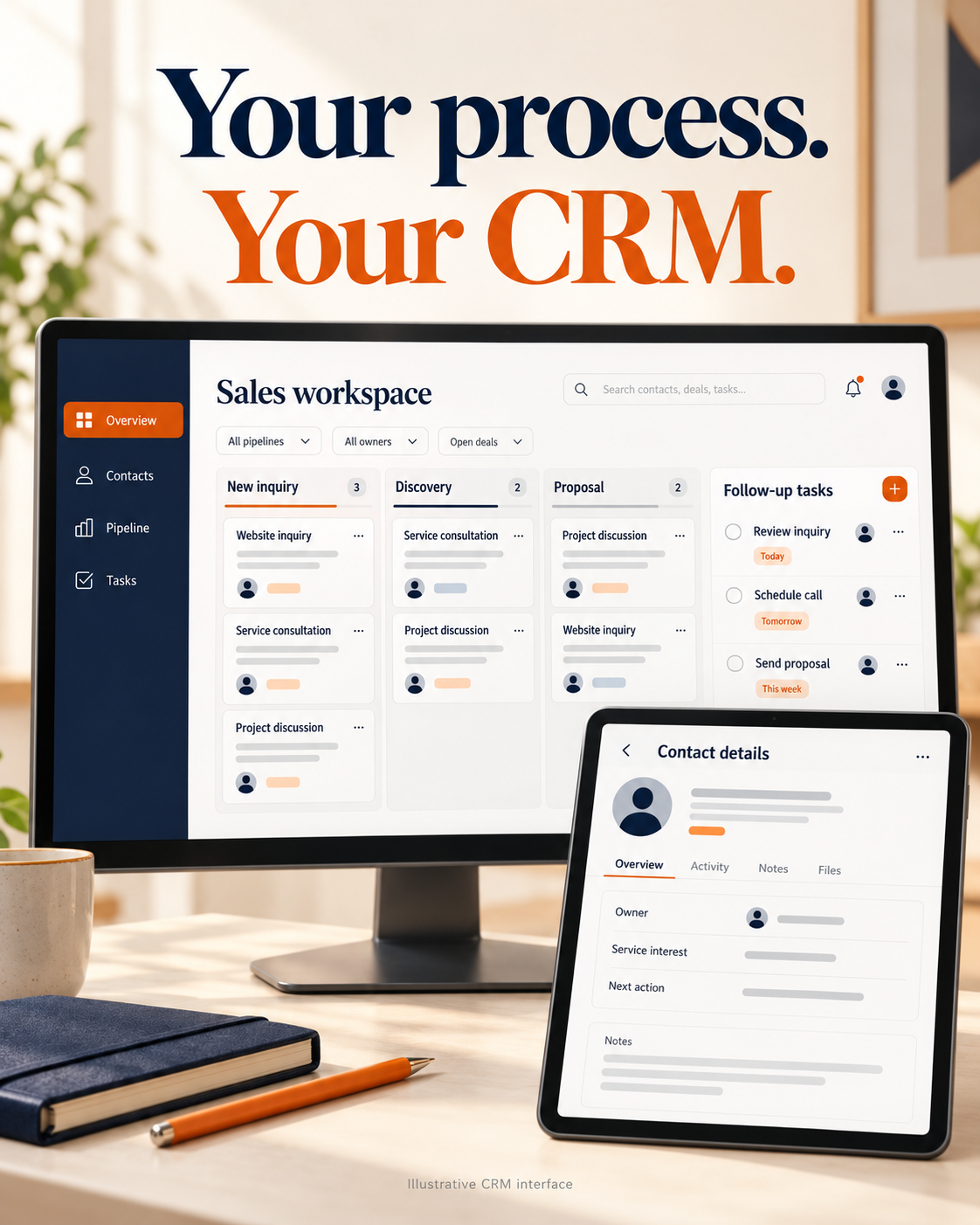
CRM Setup That Fits Your Business
The right CRM setup begins with the work your team needs to do. We help define contact fields, deal stages, activity types, and ownership rules around that process. A simple system that people maintain can be more useful than a complicated one that nobody trusts.
We also discuss the information you truly need to collect. Excess fields can make updates feel burdensome, while missing fields can prevent useful reporting. The goal is to capture enough context for the next person to act without making every interaction an administrative task.
If you already use a CRM, the work may focus on improving the current setup. We review the limitations before recommending a different platform or a major change to the way your team works.
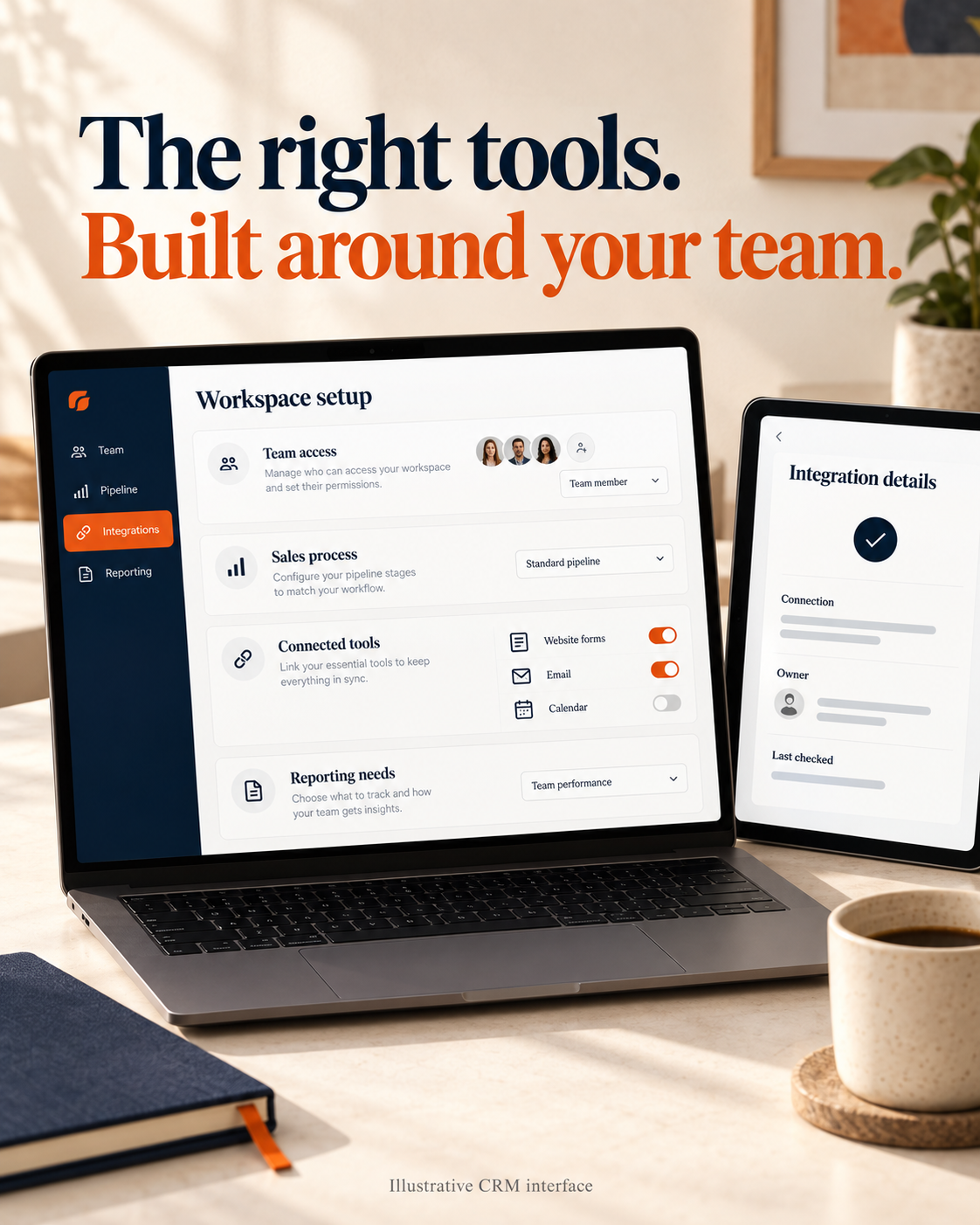
Choose Tools Around Requirements
CRM and automation platforms vary in their capabilities, cost structure, and integration options. We consider your team size, sales process, current software, and reporting needs before recommending a setup. The platform should support the process you intend to use.
Existing tools may already cover much of the requirement. A targeted improvement can sometimes solve the problem without adding another subscription. Where a new tool is useful, we explain what it would do and how it connects with the rest of the system.
We also consider maintenance. A workflow that depends on a fragile connection or an undocumented rule can create problems later. The setup should be understandable enough for the designated owner to manage after implementation.