

Quick Summary: What This Blog Covers
This blog explains how to build a structured content funnel strategy guide that moves users from TOFU awareness to BOFU conversion. It breaks down each funnel stage, shows why alignment matters, and highlights how intentional content turns traffic into long term revenue.
Introduction
Modern digital marketing is no longer about publishing content and hoping the right audience finds it. Sustainable growth comes from guiding potential customers through a structured journey, from first discovery to final decision. That journey is shaped by a well planned content funnel. For brands competing in crowded markets, understanding how to build content from TOFU to BOFU is no longer optional. It is foundational.
For Digital Maxima, content funnels are not viewed as isolated blog posts or landing pages. They are viewed as a connected system designed to educate, build trust, and convert intent into revenue. This guide breaks down how businesses can structure content across every funnel stage, why each layer matters, and how a cohesive content funnel strategy guide improves long term performance.
Understanding the TOFU to BOFU Framework
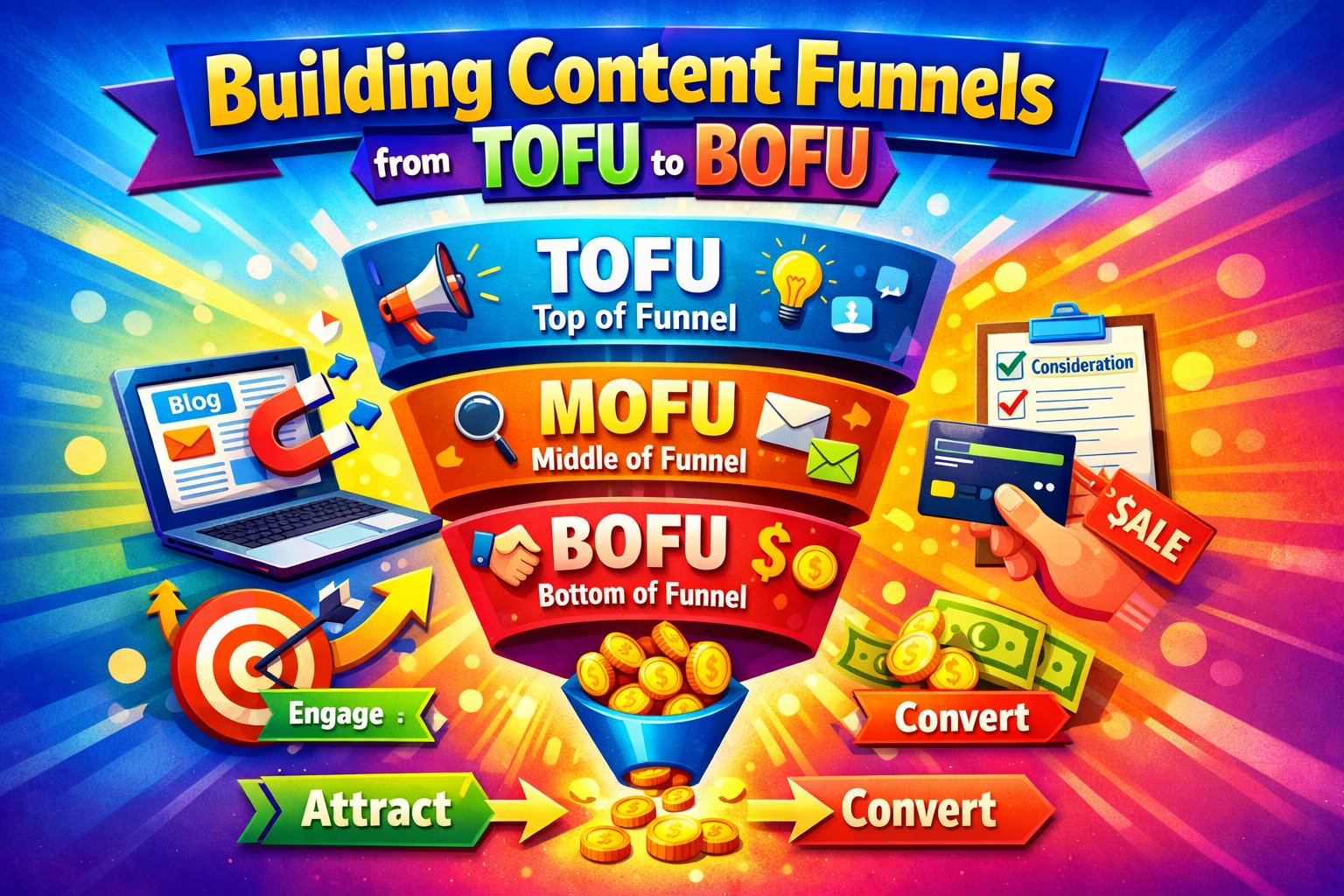
Content funnels are typically divided into three primary stages. Each stage serves a distinct purpose and speaks to a different level of awareness.
Top of Funnel TOFU Content Explained
TOFU content focuses on awareness. At this stage, users are not actively looking to buy. They are identifying problems, asking questions, or researching broad topics.
Common TOFU content formats include:
- Educational blog articles
- Industry trend reports
- Beginner guides
- Informational videos
The goal is visibility and relevance, not immediate conversion.
Middle of Funnel MOFU Content Explained
MOFU content targets users who understand their problem and are evaluating possible solutions. This is where differentiation begins.
Effective MOFU content includes:
- Case studies
- Comparison guides
- Webinars
- Whitepapers
This stage builds trust and positions the brand as a credible solution provider.
Bottom of Funnel BOFU Content Explained
BOFU content is conversion focused. Users here are ready to act and need reassurance, clarity, and proof.
Examples of BOFU content include:
- Product pages
- Service landing pages
- Testimonials
- Free consultations or demos
Each stage relies on the previous one. Without TOFU, BOFU lacks volume. Without BOFU, TOFU lacks revenue impact.
Why Content Funnels Matter More Than Ever
Consumer behavior has changed dramatically. Buyers now conduct extensive research before ever speaking with a sales team.
According to research from HubSpot, more than 70 percent of buyers fully define their needs before engaging with a vendor.
This shift makes content funnels essential. Businesses that fail to guide users through the decision making process lose potential customers to competitors with stronger educational frameworks.
Designing a Strategic Content Funnel
A successful content funnel is intentional. It is designed backward from conversion goals rather than forward from content ideas.
1. Start with Buyer Intent Mapping
Understanding intent is the foundation of any content funnel strategy guide. Intent varies significantly across stages.
TOFU intent focuses on learning.
MOFU intent focuses on evaluation.
BOFU intent focuses on decision making.
Mapping content to intent ensures relevance at every stage.
2. Align Content Topics with Funnel Stages
Not all content belongs everywhere. Clear alignment prevents confusion and improves engagement.
For example:
- TOFU content answers what and why questions
- MOFU content answers how and which questions
- BOFU content answers why this solution questions
This clarity helps move users naturally through the funnel.
3. Build Logical Content Pathways
Content should never exist in isolation. Every TOFU asset should point toward a MOFU opportunity. Every MOFU asset should guide users to BOFU conversion points.
Internal linking and clear calls to action create momentum and reduce friction.
Creating High Performing TOFU Content
TOFU content drives volume. It introduces the brand to new audiences and fuels the entire funnel.
Educational Value Over Promotion
TOFU content should never sell aggressively. Its role is to educate and establish authority.
Data from Content Marketing Institute shows that educational content generates three times more leads than paid advertising while costing significantly less.
SEO and Discoverability
Search visibility is critical at this stage. Keyword research should focus on informational queries with moderate competition and strong search intent.
Effective TOFU optimization includes:
- Clear topic coverage
- Natural keyword placement
- Structured headings
- Answer focused content
When executed correctly, TOFU content becomes a long term traffic asset.
Strengthening MOFU Content for Trust and Engagement
MOFU content is where curiosity turns into consideration. This stage requires depth and credibility.
Demonstrating Expertise
MOFU content should show how the brand solves real problems. Case studies and process breakdowns work particularly well here.
Research from Demand Gen Report shows that 47 percent of buyers consume three to five pieces of content before engaging with sales.
This makes MOFU content a decisive trust building layer.
Addressing Objections Proactively
Effective MOFU assets address common concerns before they become barriers. Pricing transparency, implementation timelines, and performance expectations should be discussed clearly.
Converting with BOFU Content
BOFU content is where strategy meets revenue. Every element should reduce hesitation and increase confidence.
Clear Value Propositions
BOFU pages must communicate benefits quickly. Users at this stage are comparing options and looking for clarity.
Strong BOFU content includes:
- Specific outcomes
- Social proof
- Clear next steps
Removing Friction from Conversion
The simpler the action, the higher the conversion rate. Short forms, clear messaging, and focused design all contribute to better results.
According to Unbounce, reducing form fields from four to three can increase conversions by nearly 50 percent.
Measuring Funnel Performance
Content funnels must be measured to improve. Each stage has unique metrics that indicate success.
TOFU metrics include:
- Organic traffic growth
- Engagement time
- Content reach
MOFU metrics include:
- Lead quality
- Content downloads
- Return visits
BOFU metrics include:
- Conversion rate
- Cost per acquisition
- Revenue attribution
Tracking these metrics reveals where users drop off and where optimization is needed.
Common Funnel Mistakes to Avoid
Many businesses invest heavily in content but fail to see results due to structural gaps.
Common mistakes include:
- Publishing without a funnel plan
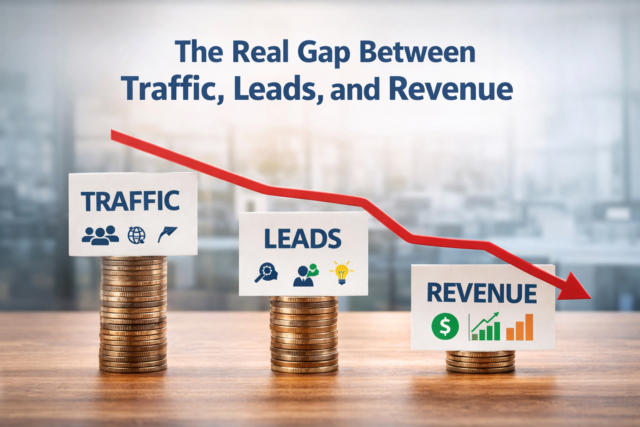
- Overproducing TOFU while neglecting BOFU
- Using the same call to action for every stage
- Ignoring data driven optimization
Avoiding these mistakes improves efficiency and ROI.
How Content Funnels Support Long Term Growth
Content funnels compound over time. Each asset builds on the last, creating a scalable system that generates consistent leads and revenue.
Unlike short term campaigns, funnel driven content continues delivering value long after publication. This makes it one of the most sustainable marketing investments available.
Final Thoughts and Next Steps
Building content from TOFU to BOFU requires strategy, patience, and alignment. When executed correctly, it transforms content from a cost center into a growth engine. A structured content funnel strategy guide ensures every piece of content has purpose, direction, and measurable impact.
For businesses ready to turn content into conversions, working with a strategic partner makes the difference. Digital Maxima helps brands design and optimize content funnels that move audiences from awareness to action. Learn how structured funnel planning can support sustainable growth by exploring the resources available at Digital Maxima.
FAQs
1. What does TOFU mean in content marketing
TOFU refers to top of funnel content designed to create awareness and attract new audiences.
2. How long does it take for a content funnel to show results
Most funnels begin showing measurable improvement within three to six months depending on competition and content quality.
3. Can one piece of content serve multiple funnel stages
Some content can overlap stages, but clarity improves performance when assets are designed for specific intent levels.
4. Is SEO important at every funnel stage
Yes. SEO drives discovery at TOFU and supports decision making at MOFU and BOFU through targeted queries.
5. How often should content funnels be updated
Funnels should be reviewed quarterly to ensure alignment with audience behavior and business goals.