

Here’s What You’ll Learn in This Article
Explore why balancing advertising performance with user experience is crucial, and how optimizing landing pages, analyzing visitor behavior, and aligning marketing with design can transform ad clicks into meaningful conversions.
Introduction
Digital marketing today offers more tools, more platforms, and more performance data than ever before. Businesses can track clicks, impressions, conversions, and customer journeys with incredible precision. Yet despite this level of visibility, many companies struggle to translate marketing performance into sustainable growth. One of the most common reasons is the imbalance between advertising optimization and user experience. The issue often comes down to ads versus user experience. At Digital Maxima, we frequently observe companies investing significant effort into improving advertising metrics while overlooking the quality of the experience users encounter after they click.
The imbalance between ads versus user experience can quietly undermine even the most sophisticated marketing campaigns. Businesses optimize targeting, refine bidding strategies, and experiment with creative variations, yet the websites receiving that traffic remain poorly structured for engagement or conversion. Understanding why this imbalance happens is the first step toward building a marketing strategy that truly drives results.
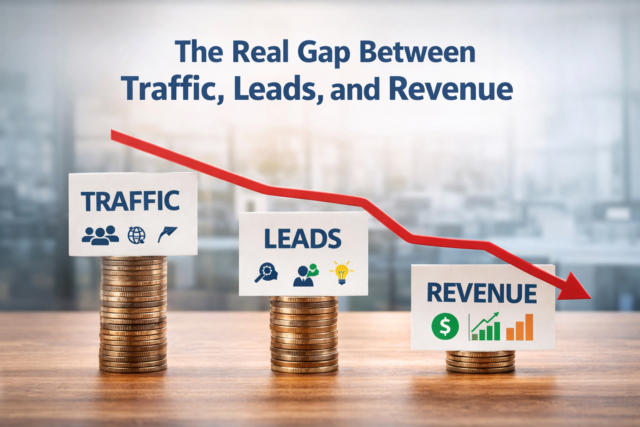
Only about 2.35 percent of website visitors convert on average according to research published by WordStream.
This statistic highlights the importance of looking beyond advertising performance and focusing on the full customer journey.
The Attraction of Advertising Metrics
Advertising platforms make optimization highly visible and measurable. Platforms such as Google Ads and Meta Ads Manager provide detailed dashboards showing impressions, click through rates, cost per click, and conversion statistics.
These metrics offer immediate feedback. Marketing teams can adjust budgets, test creatives, and monitor campaign results in real time. Because the results are visible and measurable, many organizations naturally focus their energy on improving advertising performance.
This environment reinforces the ads versus user experience imbalance. Teams feel rewarded when click through rates increase or when cost per acquisition drops, even if the overall user journey remains inefficient.
Why Experience Optimization Is Often Ignored
While advertising platforms provide immediate feedback, optimizing the user experience requires deeper analysis and cross team collaboration. Many companies underestimate the complexity involved in improving the post click experience.
Several factors contribute to this imbalance.
1. Organizational Silos
In many companies, marketing teams manage advertising campaigns while web development teams manage the website. When these departments operate independently, improvements to the user experience often move slower than advertising adjustments.
As a result, advertising campaigns become highly optimized while website experiences remain outdated or confusing.
2. Delayed Feedback Loops
Improving user experience often involves testing design layouts, refining messaging, and adjusting navigation structures. These changes require time to evaluate and measure. Tools such as Google Analytics and Hotjar help track user behavior, but interpreting the results and implementing changes is a longer process compared with adjusting advertising bids.
Because advertising results appear faster, teams naturally focus on the area where they see immediate improvements.
3. Misunderstanding the Customer Journey
Another reason behind the ads versus user experience problem is the misconception that the advertising click represents the primary conversion opportunity. In reality, the click is simply the beginning of the interaction.
Customers evaluate credibility, clarity, and usability before making decisions. When websites fail to communicate value clearly, visitors leave regardless of how effective the advertisement was.
The Hidden Cost of Ignoring Experience
Companies that focus exclusively on advertising performance often experience rising marketing costs over time. As competition increases, advertising platforms become more expensive, forcing companies to spend more money to generate the same number of clicks.
If the user experience remains unchanged, the cost per acquisition gradually increases because conversion rates remain stagnant.
Research from HubSpot shows that improving conversion rates on landing pages can significantly reduce customer acquisition costs. When companies address the ads versus user experience imbalance, they often discover that improving the website experience delivers better returns than increasing advertising budgets.
How User Experience Shapes Conversions
User experience influences nearly every stage of the decision making process. After clicking an advertisement, visitors evaluate several factors before continuing their journey.
These include:
- Clarity of the value proposition.
- Ease of navigation.
- Visual design and trust signals.
- Page loading speed.
- Simplicity of forms or checkout processes.
Even small obstacles can interrupt the conversion process. For example, slow page loading speeds often cause visitors to leave before engaging with the content.
A one second delay in page load time can reduce conversions by 7 percent according to analysis shared by Neil Patel.
Improving these elements helps close the gap between ads versus user experience and ensures that advertising traffic produces meaningful results.
The Role of Landing Page Design
Landing pages are one of the most important components of the user experience after an advertisement click. Unfortunately, many companies direct advertising traffic to generic website pages rather than optimized landing environments.
Dedicated landing page tools such as Unbounce allow businesses to create focused experiences that guide visitors toward specific actions.
Effective landing pages typically include:
• Clear headlines that match the advertisement message
• Concise explanations of benefits
• Trust signals such as testimonials or certifications
• Simple calls to action
When landing pages align with advertising messaging, the transition between the ad and the website becomes seamless.
Behavioral Insights That Improve Experience
Understanding user behavior is essential for balancing ads versus user experience. Businesses must analyze how visitors interact with pages, where they hesitate, and where they abandon the journey.
Behavior tracking platforms such as Crazy Egg help identify patterns through heatmaps and click tracking. These insights reveal areas where design or messaging may confuse users.
By studying behavioral data, organizations can identify the exact points where experience improvements will have the greatest impact.
Aligning Marketing and Design Teams
One of the most effective ways to resolve the ads versus user experience imbalance is through collaboration between marketing and design teams. Advertising campaigns should be developed alongside landing pages, messaging frameworks, and conversion strategies.
When teams collaborate, they can ensure that advertisements promise the same value that the website delivers. This alignment reduces friction and increases conversion rates.
Successful organizations often treat marketing campaigns as complete systems rather than isolated activities.
A Balanced Optimization Strategy
Companies that achieve sustainable growth recognize that advertising and user experience must evolve together. Instead of focusing exclusively on ad performance, they adopt a balanced optimization approach.
Key principles include:
- Testing both advertising creative and landing page design simultaneously.
- Measuring conversion rates rather than focusing only on click through rates.
- Continuously refining the user journey from advertisement to purchase.
- Using analytics tools to identify friction points in the experience.
This strategy transforms the ads versus user experience challenge into a powerful opportunity for growth.
Why Experience Often Outperforms Ads
Interestingly, improving user experience often delivers stronger long term results than increasing advertising budgets. When conversion rates improve, businesses can generate more revenue from the same level of traffic.
Organizations such as Nielsen Norman Group consistently emphasize that usability improvements have a direct impact on business performance.
When companies close the gap between ads versus user experience, they discover that better experiences amplify the effectiveness of every marketing channel.
Final Thoughts
Advertising platforms will continue to evolve, offering new targeting capabilities and performance metrics. However, the core challenge remains the same. Companies must ensure that the experience customers encounter after clicking an advertisement matches the promise made in the ad itself.
Understanding the dynamic between ads versus user experience allows organizations to move beyond surface level optimization and build marketing systems that convert attention into revenue. By focusing on both advertising performance and user experience quality, businesses can create more efficient campaigns and stronger customer relationships.
At Digital Maxima, we help organizations evaluate the entire customer journey rather than focusing solely on advertising metrics. If your campaigns are generating traffic but not producing the expected results, the solution may lie in balancing ads versus user experience through strategic design, data analysis, and conversion optimization. To explore how a unified marketing strategy can improve your performance, visit our internal resource on digital marketing consulting services.
Frequently Asked Questions
1. Why do companies often focus more on advertising than user experience?
Advertising platforms provide immediate metrics and visible performance data, making optimization easier and faster compared with improving website experiences.
2. How does user experience affect advertising performance?
A strong user experience increases conversion rates, allowing businesses to generate more leads and sales from the same advertising traffic.
3. What tools help improve user experience?
Platforms such as Google Analytics, Hotjar, Crazy Egg, and Unbounce provide insights that help businesses analyze behavior and improve page performance.
4. What is the biggest mistake companies make with landing pages?
Many businesses send ad traffic to generic website pages instead of dedicated landing pages designed specifically for conversions.
5. Can improving user experience reduce advertising costs?
Yes. Higher conversion rates allow companies to generate more revenue from existing traffic, reducing the cost per acquisition.